Copy of Hugo Schwaller, Michel de Montaigne a Lucca (1581)
Published on June 12, 2022 by the editor's edition Signature:
The preservation of the philosophy and French politics of Michel Eyquem de Montaigne (1533-1592) lasted as long as he lived in Lucca. Montaigne offers a fascinating view of Lucca's life in 1581. The Italian version is complete with a new capitolo: “The Liberation Republic of Lucca - Real and Mito”

The publication is also available in the lingua tedesca:
The German language edition is also available, in its second expanded edition.
Hugo Schwaller, Michel de Montaigne in Lucca (1581)
Published on November 9, 2020 by Signathur Publishing:

In 1580-1581, Michel de Montaigne traveled on horseback from Beaumont-sur-Oise, near Paris, to Italy, accompanied by several noblemen. Suffering from a serious kidney ailment, he sought out mineral springs in the land of sunshine. This journey resulted in * Un Viaggio in Italia* , arguably the first travelogue in the modern sense. Montaigne's vivid descriptions of the many places he visited in Italy and the numerous people he encountered there soon became the central theme, overshadowing his health concerns.
Montaigne was a homo universalis, a universal scholar of the late Renaissance and the early Enlightenment, always in search of new knowledge and insights in the interest of personal development and growth.
And what country could be more interesting for such a mind than Italy? - the country with its uniquely rich history, its literature, its music, its many highly developed arts.
Montaigne's travelogue is a unique adventure. We immerse ourselves in the life, daily routines, thoughts, and arts of an era that dates back some 450 years.
Of all the observations that this man, interested in everything, made in around 125 places in Italy, and of the numerous human encounters he had there, we focus on one place he visited: the city of Lucca.

“I have a recinta and a bastion, with my fossati poco profondi, pieni d'erba verde, piatti e larghi al fondo..."
"The city is surrounded and fenced in by a bulwark; the ditches are shallow and heavily overgrown, the plain is wide and flat."
There, the French thinker spent a total of 32 days during his journey, which lasted 17 months and 8 days – only in Rome did he stay longer! His stays in Lucca occupy only a few pages and have therefore received little attention to this day. They are, in fact, exceptionally rich and associative. The city, with its world-renowned silk trade extending as far as Asia, appears to Montaigne to be full of dynamism; yet it also offers him intellectual contemplation, where he finds peace for his intensive studies. Montaigne's observations are vivid and incisive, and they provide a unique glimpse into the everyday life of the city in those distant years of the waning Cinquecento. They become for us a journey into the past.
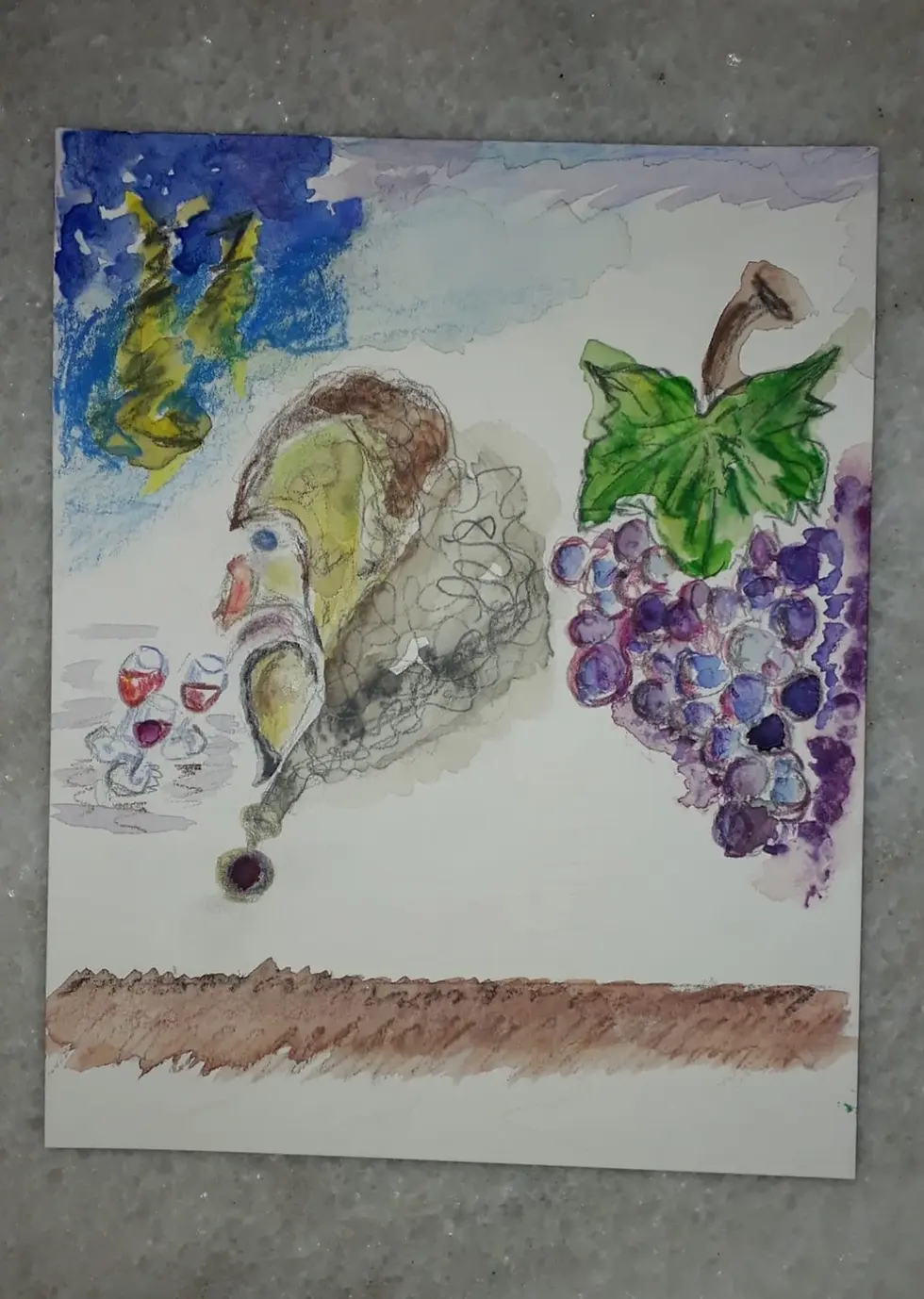
“I vini sono mediocremente buoni.”
"The wines are only mediocre."
The diverse experiences of this learned individualist in Lucca are as exciting, instructive, and entertaining today as they ever were, and they have lost none of their French wit. Montaigne's account invites us to experience the city with him in 1581, to follow his expansive thinking, and to become acquainted with his rich observations and his benevolent attitude towards the then-free Republic of Lucca.

“My partii di Lucca senza aspettare certi gentiluomini i quali si mettevano in ordine per venirmi ad accompagnare.”
"I left Lucca without waiting for certain noblemen who were still busy getting ready to accompany me."
New topicality
The book was published during the global crisis of the Corona pandemic, which gripped the world in the spring of 2020. Masks, quarantines, cordoned-off so-called red zones, and many other protective measures were intended to counteract the spread of the Covid-19 pathogen and prevent further infections.
Montaigne would likely be familiar with all these modern precautions. On his journey, he repeatedly had to evade the plague, which was rampant at the time, and plan his routes accordingly or change them spontaneously to avoid infection or having to spend forty days in isolation in Italy. It was these then-feared "quaranta giorni" ( forty days ) from which the concept of quarantine, no less feared worldwide today, is derived.
Montaigne's travelogue also shows that history has caught up with us. This gives it a further, unexpected relevance.
The French writer Gaspard also demonstrates the significance that Montaigne's journey has retained to this day, extending beyond the immediate context of the Corona crisis, and how modern and inspiring it remains. Koenig . In the days since this book was published, he is riding along the same route as the philosopher did 450 years ago, from Bordeaux to Italy. Like him, he seeks direct and unbiased human contact, as a counterpoint to today's mostly fast and hectic travel; (see NZZ e-paper from October 17, 2020, and www.gaspardkoenig.com/cheval ).
Zurich-based artist Sandra Colla immersed herself in Montaigne's observations and experiences during his stay in Lucca and created sensitive illustrations for the book. Anna Gerratana from Pisan provided a masterful Italian translation of the text.
ISBN 978-3-906273-39-6